
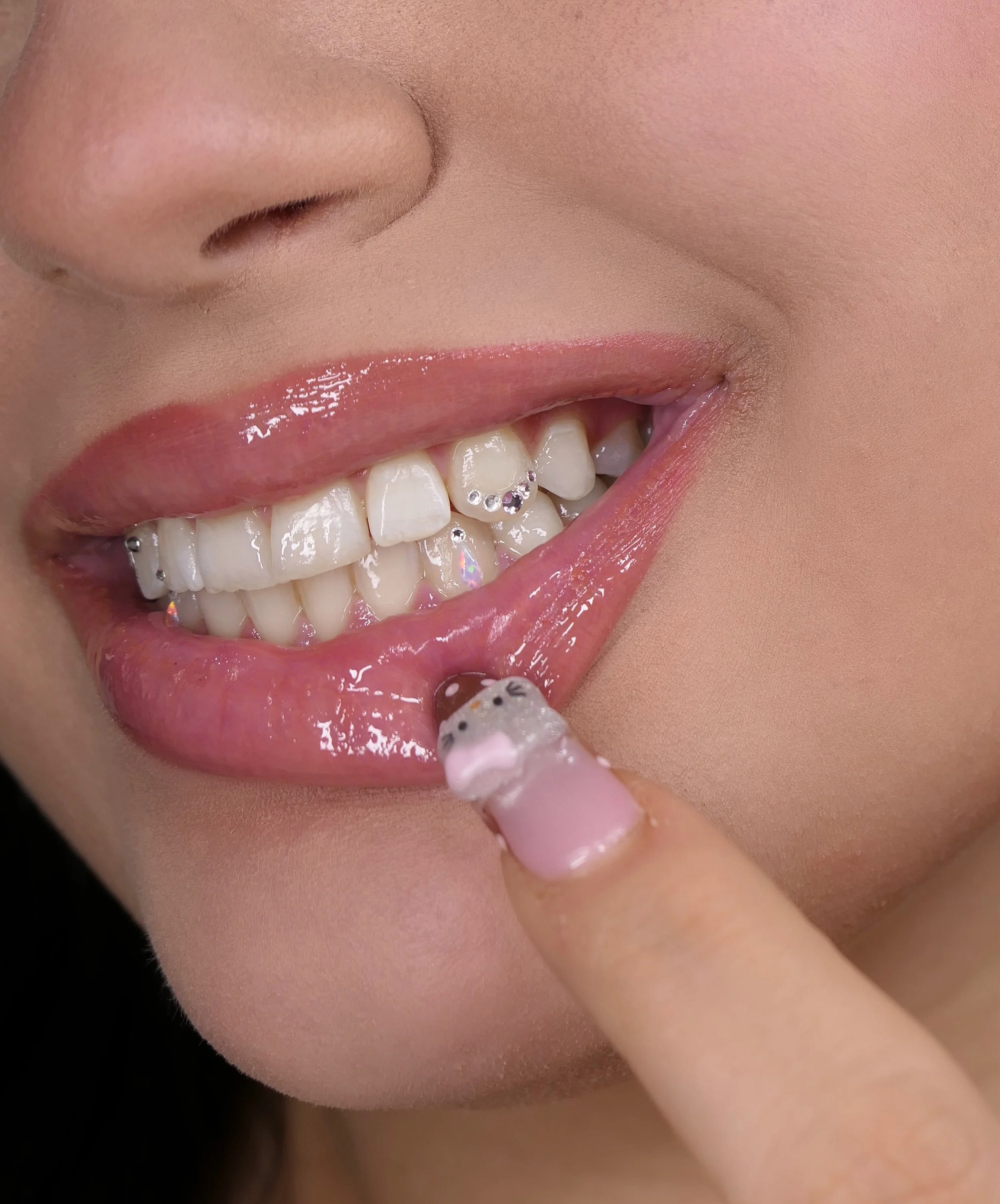
Are tooth gems safe?
Yes — when it is done properly. A tooth gem is a small crystal or gold ornament bonded to the outer enamel with the same class of adhesive dentistry uses for orthodontic brackets. There is no drilling, no hole and no permanent change to the tooth. It is reversible, and the enamel underneath is left intact. Safety lives almost entirely in the technique.
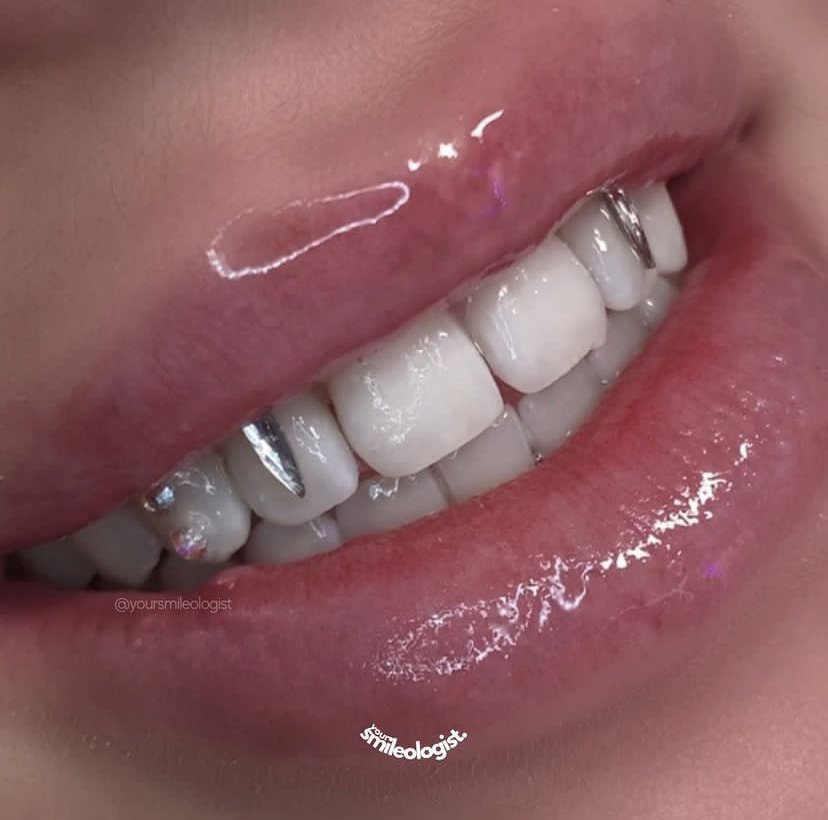
What actually happens when a tooth gem is applied?
The process mirrors a routine cosmetic bonding step. Nothing penetrates the tooth: the ornament sits on the surface, held by a cured resin footprint smaller than the gem itself. Start to finish, a single gem takes only a few minutes.
-
Clean & isolate
The tooth is polished and kept dry — moisture is the enemy of a lasting bond.
-
Etch
A mild gel is applied for a few seconds to create microscopic texture on the enamel, then rinsed away.
-
Bond
A thin layer of bonding resin is placed on the conditioned surface.
-
Set the gem
The gem is placed into a small dot of adhesive and positioned.
-
Cure
A curing light hardens the bond in seconds. The gem is now held by a resin footprint smaller than itself.
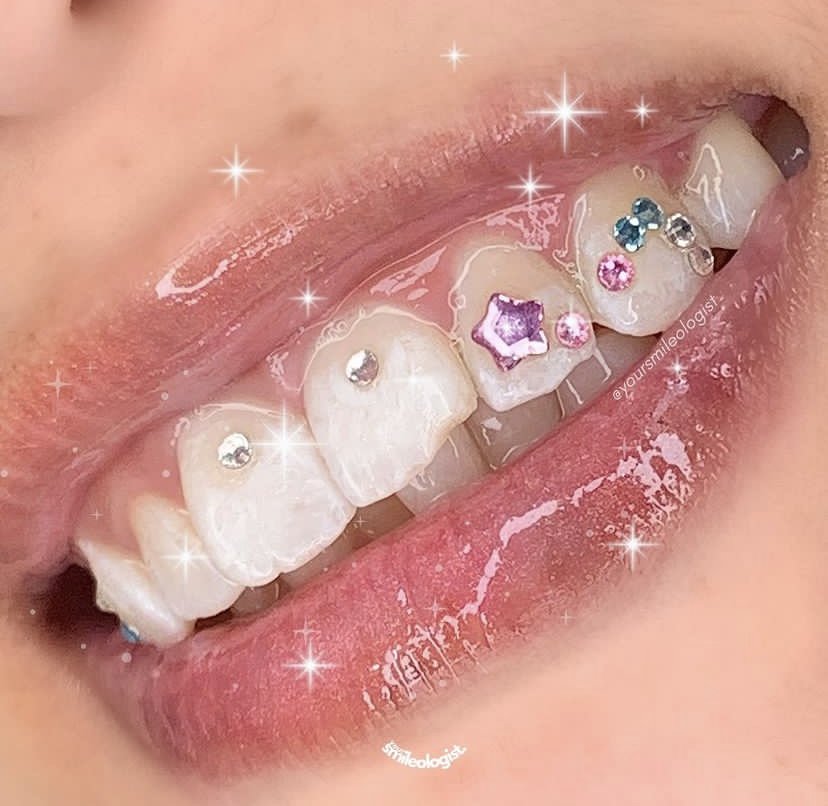
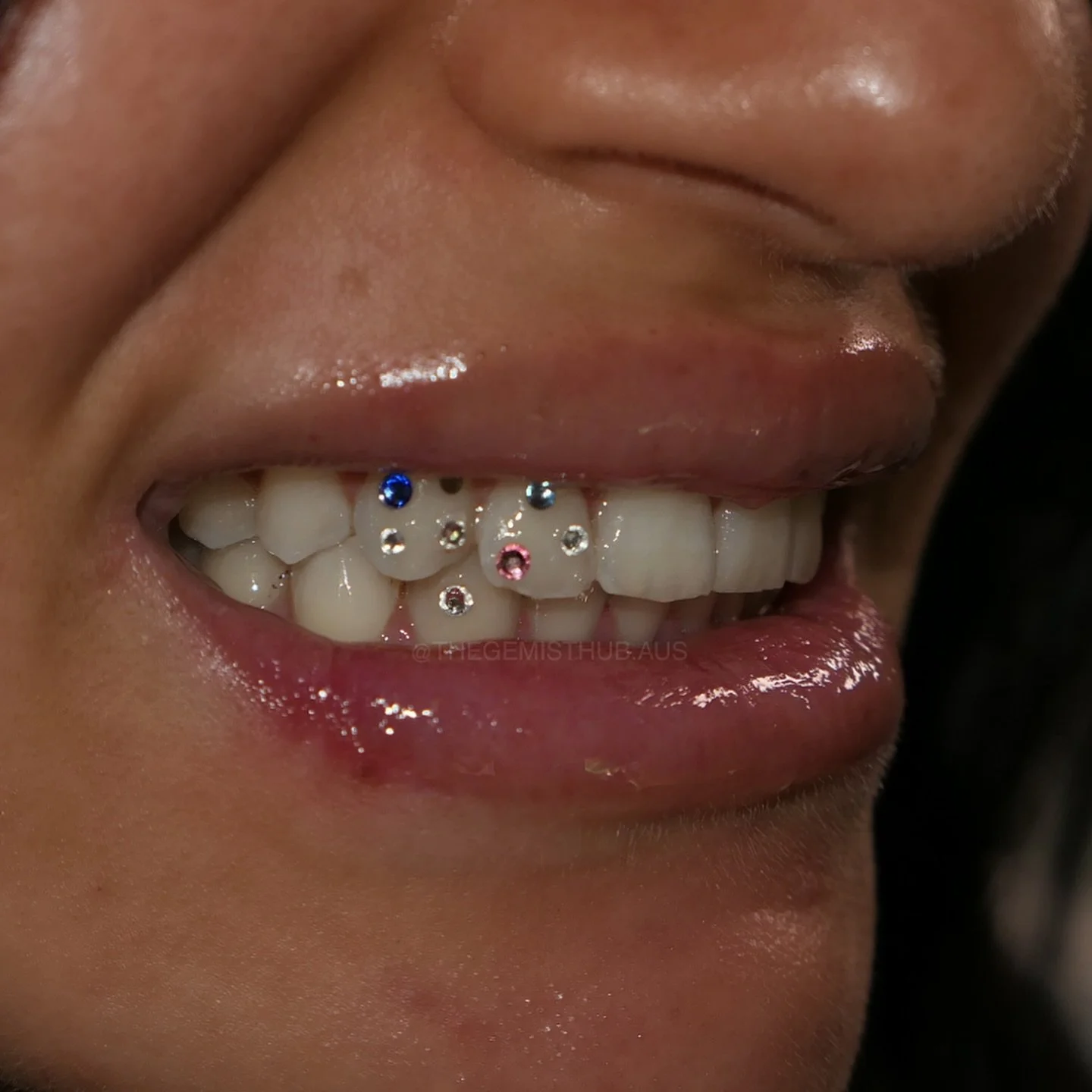
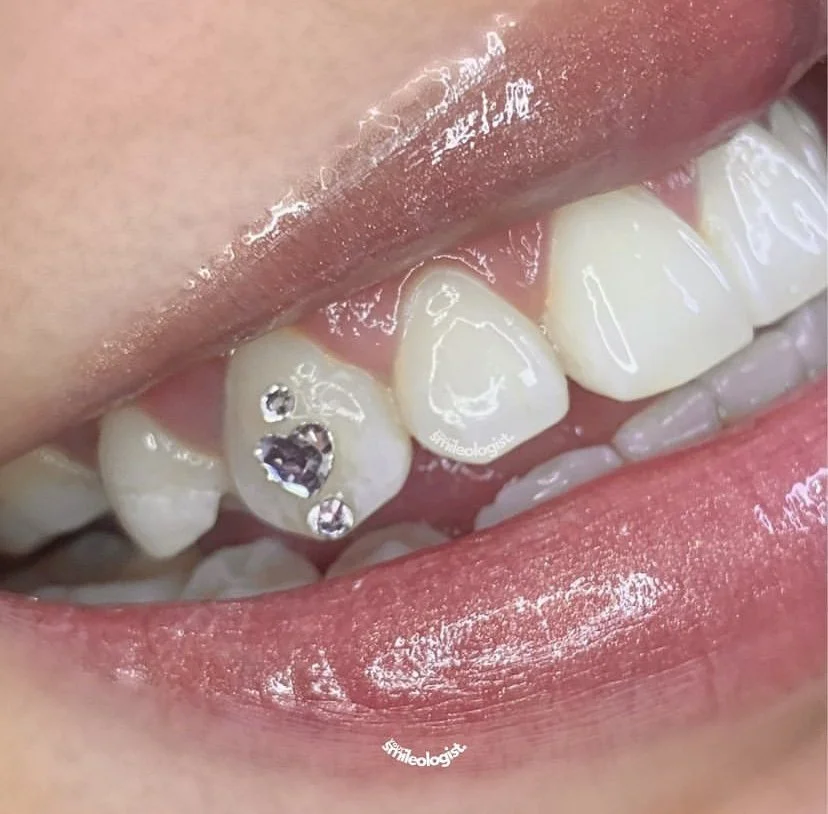
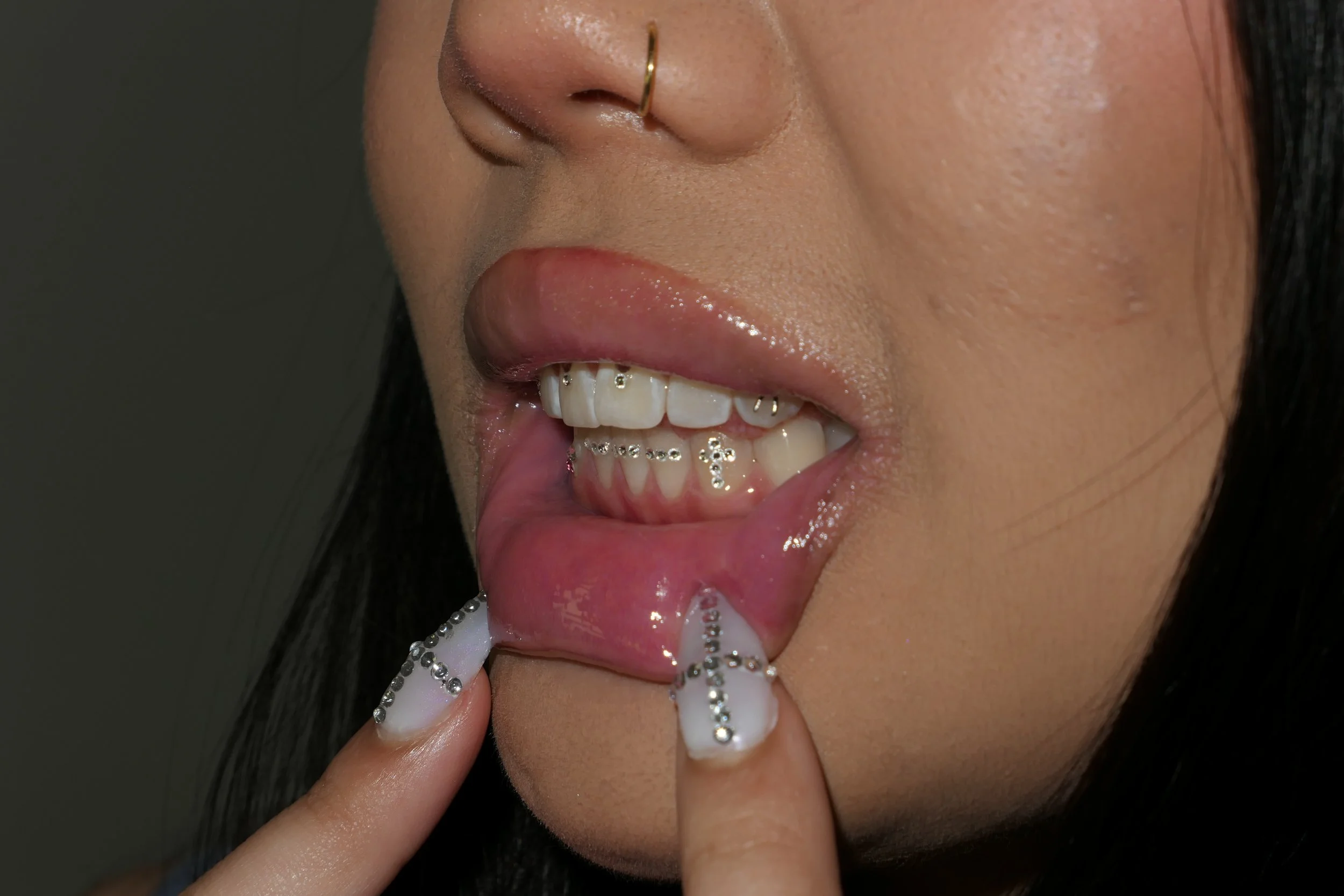
Every gem is different — colour, cut, placement and personality. These are all real placements from the studio:
Is the enamel damaged?
No — when the correct method is followed. Etching does not remove meaningful enamel; it lightly conditions the outermost surface, the same reversible step used before a filling or a brace bracket. The fear that gets raised — permanent enamel loss — comes from aggressive preparation or from prying a gem off without the right tools. Applied and removed properly, the closest clinical analogue, orthodontic bonding, shows enamel remaining within normal limits once the resin is polished away.
Enamel is conditioned, not carved.
Which adhesives are used — and do they matter?
They matter a great deal. The adhesive is what separates a gem that lasts months from one that fails in days — or worse, one bonded with a material never meant for the mouth. The choice is the single biggest safety variable after the operator’s hands.
| Adhesive | How it bonds | Typical hold | Best for |
|---|---|---|---|
| Light-cured composite resin | Etch, bond, resin — set with a curing lamp | 6–18 months | The clinical standard; the strongest, most controlled bond |
| Flowable composite | A thinner cured resin, same chemistry | 3–12 months | Small or curved gems needing a lower profile |
| Glass-ionomer cement | Chemical bond; releases fluoride | Weeks–months | Temporary placements; gentler but a weaker hold |
| Household / craft glue | Not enamel-safe; not biocompatible | — | Never. Toxic, unstable, and can harm the gum and enamel |
What are the real risks?
The genuine risks are modest and mostly preventable. The most common is simply that the gem falls off — an inconvenience, not an injury, usually caused by moisture reaching the bond during application. Beyond that, plaque and tartar can gather at the margin if the area is not cleaned well, which over time can irritate the gum or contribute to a small area of decay — the same as any spot that is hard to reach. A poorly finished bond can feel rough to the tongue.
How should a gem be removed?
Removal is quick and should be done by a trained applicator, not at home. The gem is gently lifted with a dental instrument, the small resin footprint is buffed away, and the enamel is polished smooth — leaving the tooth as it was. No filing, no reshaping. If you ever want it gone, it goes, and the surface underneath is unchanged.